Welcome to Happily Even After Betrayal with Life Coach Jen. This podcast is where we talk about betrayal and divorce and what it actually looks like to live through those experiences while still being a parent, a grandparent, a partner, or just a human trying to keep it all together. If your heart feels shattered, your nervous system feels dysregulated, and your future feels unclear, you’re in the right place. Here we focus on understanding what happened so you can rebuild your identity, restore your confidence, and find peace. So you can create your happily even after one episode at a time.
The Hidden Cost Of Shoulds
Hey friends, welcome to today’s podcast. Now, I know I’ve done episodes on this topic, but I think it is something we all struggle with. So we need more episodes we clearly need to have another episode about it, but it’s our expectations, right? We I think our world, our society, we have lots of expectations of ourselves, of other people, of how the world should work, and we get ourselves in a mess. And so what if one of the reasons you’re struggling to find peace after betrayal isn’t just what happened to you, but all the expectations you have about what should be happening now. And I deal with this with my clients every day and myself, of course, but we get really stuck in this. Your spouse should be more remorseful. Your marriage should be getting better. You should be over this by now. You shouldn’t still be triggered. Your life should look different. That’s a lot of shoulds, my friends. And what if those expectations are adding an extra layer of suffering to an already painful experience? And I’m gonna tell you, they totally are. It’s like you’re punching yourself in the face, right? Stop. Stop punching yourself in the face. So I was listening to Better Than Happy, Jody Moore, my favorite, one of my favorite podcasts. And she had a guest on who I’d never heard of. His name is Brad Bizjack. And he was talking, and I just had this, it just my brain was like, oh my gosh, this is amazing. And I view most things that I listen to through the lens of betrayal and divorce. And how can I, how can I learn from this and how can I use it to help my clients? So I was listening to this podcast. I’d never heard of him, but when he said this, it just caught my attention. He was talking about expectations and the disappointment we create when life doesn’t meet them, right? You can all relate to this. I know you can. He suggested shifting our expectations into appreciations. And I just loved this idea. Because I think so many of us are walking around with a mental list of everything that’s wrong with our lives. And after betrayal, that list can be very long. But what if we started creating another list? A list of what we appreciate. Not because everything is good, but because everything isn’t bad either. Our brains naturally notice threats and problems. After betrayal, that tendency can become even stronger because our nervous system is trying to protect us. Remember, our lower brain, our lower brain’s job is to keep us alive, making sure we survive at all times. When we’re constantly scanning for what’s wrong, we may overlook the things that are actually going well. And that’s where appreciation can become a powerful healing practice. So, first of all, I want you to understand your expectations after betrayal. They aren’t inherently bad, right? We all have them. So don’t be like, oh, I shouldn’t expect anything right now. We can have expectations, but we just need to be realistic with them. We expect our spouse to be faithful. Like I totally expected my spouse to be faithful. 100% okay. Of course I did. Of course you did. We expect honesty, we expect kindness, we expect our marriage to be a safe place. Those are reasonable relational expectations. And when someone has an affair, they violate important agreements and destroy a sense of safety. So I want to be clear: expecting your spouse to be faithful wasn’t unrealistic. Expecting honesty wasn’t asking too much. The problem comes when we start attaching our emotional well-being to expectations we cannot control. Can you see yourself doing this? I know I 100% did.
Expectations That Keep You Stuck
So these are some ways that expectations can keep us stuck. First of all, expectations of our spouse. They should know exactly what to say when I’m triggered. They aren’t gonna know exactly what to say. They might try, but you’re gonna have to help them out here. They should be healing faster. Well, we can’t control how anyone heals, right? That’s an inside job. They should understand how much they’ve hurt me. They aren’t gonna understand how much they’ve hurt you because they aren’t you. You have to understand how much you feel hurt. They should never get defensive. Well, unless you’re married to an AI robot, we’re gonna be defensive. We’re human, right? We we need to learn how to manage that. But people get defensive. They should be doing everything perfectly if they want to save this marriage. Well, no one’s perfect. You’re not married to Jesus, so drop the idea that your spouse is also supposed to be perfect. Some of these are legitimate needs and requests, others may be expectations that require conversations, time, and consistent effort. For example, a spouse who betrayed you should take responsibility for their choices, but expecting them to intuitively know what you need every moment may lead to additional disappointment. They’re just not going to know that. And not all spouses take 100% accountability for their choices. So, number two, expectations of ourselves. I should be over this by now. First of all, remember, healing doesn’t happen over time. It has to be intentional. You have to be purposely focused on your healing. It’s not like, oh, it’s been three months. I should be healed. That’s not how healing works. Okay. I shouldn’t still cry. Don’t judge yourself for having emotions. Emotions are good. Clearly, you needed to cry. I should know whether to stay or leave. At first, you don’t know this. You might not know this for years. So stop shitting yourself. I should be stronger. There isn’t a person that, if you’re strong enough, you’re gonna be able to deal with this. No, it’s not about strength. I shouldn’t still love someone who hurt me. You just can’t turn on and off love. People hurt us all the time that we love. And that’s a beautiful thing, right? That’s a beautiful thing that we can actually love someone. And that’s what forgiveness is for. And so we’re just putting all these unrealistic expectations on ourselves. I want you to consider how much unnecessary suffering these thoughts can create. You are already hurting, and now you’re judging yourself for hurting. Can you see it? So, expectations, the third thing we do are put expectations on our healing. People think this that healing is a straight up and down line. It is not. Imagine a very squiggly, complicated line. That’s what healing is. Healing isn’t just you go up, up, up, up, up, you go three steps forward, ten steps back, two steps forward, five steps back, ten steps forward, one step back. That’s what healing looks like and feels like. Relying on your therapist or coach to fix everything quickly. That’s unrealistic expectation. First of all, we’re facilitators, we’re helping you, we’re guiding you, but it is your job to practice, to do the work, to actually work on changing your thoughts. Remember, you’re the only person that can change you. Once I’ve forgiven, I shouldn’t feel angry. No, you’re human. Anger is a human emotion. You can forgive someone and still get mad at them sometimes. If I’m still triggered, I must not be healing. That’s a lie too. That’s not true, but you might be able to handle the trigger better once you’ve healed more. That’s possible. Healing doesn’t follow a perfect timeline. Sometimes you can have three really good days and then wake up on Thursday and feel like you can’t get out of bed and you feel like you’re right back at the beginning. That’s just what healing looks like. And that doesn’t mean that you haven’t made any progress. A question I want you to ask: where in your life are your expectations creating disappointment? Oftentimes we blame it on other people. We think, well, our spouse is disappointing us because they didn’t meet our expectations. No, we disappointed us because we had the expectation in the first place. Which of those expectations are actually within your control? And I’m guessing a lot of these are not in your control that I said, and then some of them are. The difference
Expectations Versus Standards Versus Appreciation
between expectations, standards, and appreciation. So I can already hear some of you saying, Jen, are you telling me I should appreciate my spouse when they’re still lying to me? No, absolutely not. Don’t do that. Appreciation does not mean you stop having boundaries. It doesn’t mean you stop expecting honesty. And it definitely doesn’t mean you have to be grateful that your spouse had an affair. So this is an example of an expectation, and then I’m going to show you how we can turn it into an appreciation because this is the practice I want you to learn from this podcast. And I think it’s it could be life-changing. My spouse should know what I need. I appreciate when my spouse listens and follows through. Can you hear the difference? I should, an expectation is I should be further along in healing and appreciation about your healing. I appreciate the progress I’ve made, even if it’s small. My life should look different. I appreciate what I can create with the life I have today. Can you see it’s just a small difference, but it could make a huge impact. I shouldn’t have bad days anymore. I appreciate that I have tools to get through difficult days. My spouse should make me happy. I appreciate that I’m learning to create more peace within myself. A standard is something you are willing to uphold. An expectation is something you anticipate. Appreciation is something you choose to notice. And you can have all three. For example, I expect honesty in my marriage, I have a boundary around continued dishonesty, and I can appreciate the honest conversations we’re beginning to have. Or another example, my spouse is continuing to lie and I’m not going to pretend otherwise. But I can appreciate that I’m learning to trust myself and make decisions that protect my well-being. Appreciation never requires denying reality. And I think our expectations kind of are denying reality, right? Because between our expectations and reality, that’s where the frustration is. And so many of us, if we lowered, we think we lower our expectation, then life will be worse. Actually, it’ll be so much better. Okay. So
Why Appreciation Changes Your Brain
why appreciation helps us heal? Your brain notices what you practice noticing. So I love the example of buying a car years ago in why I my Tesla is a 2018. And I had seen a Tesla like at a mall. Like why they have them in the mall, I don’t know. But they had a Tesla store in Houston, Texas, and I I fell in love with it and I said, This is the car I want. And I at that time where I lived, not many people had a Tesla. And I remember so excited I got a Tesla. Well, guess what happened, right? Suddenly, everywhere I went, I saw my exact car, a white Tesla. And it wasn’t that everyone went and bought a Tesla the same time I did. It’s just because I wasn’t noticing them before. But the moment I started noticing them, my brain started seeing them as well. And we’re just simply paying attention to something that matters, right? So now think about what happens after betrayal. And I think same with Instagram, right? You, your Instagram algorithm, you would think the entire world is getting cheated on because your algorithm, all the algorithm is showing, which is a lot of you found me on Instagram or social media because I talk about betrayal. And that was something you’re interested in because it’s what happened to you. So now your algorithm is showing you all these reels and podcasts about betrayal. But it doesn’t mean that everyone is experiencing betrayal. You’re just paying attention to it. So think about what happens, you know, after you discover your spouse had an affair, you’re looking for signs of dishonesty. You’re looking for evidence that your spouse hasn’t changed. You’re looking for everything that might go wrong. And sometimes there really are warning signs, and those deserve attention. But when your attention is consumed by searching for danger, you can miss other parts of your life. Missing things like your kids, their laughter, their, you know, their events that they’re experiencing. You might miss a beautiful sunset, a meaningful conversation with a friend, the fact that you slept six hours instead of three, the fact that you made a decision that you weren’t terrified to make. Those things matter too. So you can see how that shift can help you. Your nervous system loves feeling grateful. When you’ve experienced betrayal trauma, your nervous system can be on constant high alert. It’s called hypervigilance. You may feel constantly anxious, tense, or on edge. Gratitude isn’t a cure for curing betrayal trauma, and it doesn’t automatically regulate your nervous system, but intentionally notice noticing safe, pleasant, or meaningful experiences can support your ability to shift attention away from constant threat monitoring. So it’s going to help let your nervous system breathe. So try this. Put your feet on the ground, take a slow, deep breath, look around the room, and identify three things that feel comforting, supportive, or safe enough in the moment. Because we want to really bring you back just in the moment right now. Maybe you see your favorite blanket, maybe it’s your dog, maybe it’s knowing you have a friend you can call. This isn’t pretending the betrayal didn’t happen. It’s reminding your brain and your body that betrayal isn’t the only thing happening in your life. Can you see how this could be helpful? So your brain’s not constantly consumed from all the lies and stories and where are they? The searching. Your brain may be very good at collecting evidence of what’s wrong. What if you started collecting evidence of what’s right? So,
some five ways to turn expectations into appreciations. Tool one. Ask yourself, what am I expecting right now? And what could I appreciate instead? I should be further along in my healing because I appreciate that I’m not where I was six months ago. I know it sounds simple and silly, but it makes such a huge difference. I promise. I want you to try it. Tool two. And I know I’ve done an episode on this too, because I love the word and A N D. This is one of my favorites because two things can be true at the same time. I’m devastated by what happened, and I appreciate the friends who have supported me. And if you can, get out a notebook and write down as many of these as you can. I’m disappointed in my spouse, and I appreciate that I’m learning to advocate for myself. Divorce is heartbreaking, and I appreciate the peace I’m beginning to experience. You don’t have to choose between acknowledging pain and appreciating life. You can hold space for both. Tool three. Start an appreciation inventory. Each evening or morning, whatever works in your schedule, write down three things you appreciated that day or the day before. Make them specific. Instead of, I’m grateful for my children. Try on, I appreciated that my son called me to tell me about his day. On a really hard day, it might simply be, I appreciated that I got out of bed today. Just realize small things count. They don’t have to be the bigger the better. Tool four. Look for evidence of your own growth. After betrayal, it’s easy to measure progress by whether your spouse is changing. What if you measured your own growth instead? I appreciate that I set a boundary. I appreciate that I didn’t check their location today. I appreciate that I feel my feelings instead of trying to numb them. I appreciate that I asked for help. Those are real accomplishments and they’re your accomplishments. If we based my healing on if my spouse changed, I still would be stuck and miserable because he didn’t. Tool five, find one thing on the worst days. So some days you’re not going to feel grateful and you’re going to feel angry, sad, exhausted, or completely overwhelmed. That’s okay. Don’t force yourself to create a long gratitude list. Just ask, is there one thing I can appreciate about today? Maybe it’s that you took a shower. Maybe it’s that someone checked on you. Maybe it’s that you made it through another difficult day. You can have a terrible day without deciding you have a terrible life. So many of us get that mixed up. We think one terrible day means we’re gonna have a terrible life. It’s just not true. Remember, it’s one moment, one day. So, some examples of different scenarios.
Rebuilding Marriage Divorce Or Deciding
So, this could be for the person that’s rebuilding their marriage. Imagine someone whose spouse had an affair, every day they’re thinking, why aren’t they doing more? Why don’t they understand me? Why aren’t we further along? Now, those may be important questions. And if their spouse isn’t taking accountability, they need to address that. But if their spouse is genuinely doing the work and I’ve seen this, I’ve coached the person that had the affair, and they are working hard, and their spouse is just still just treating them like they’re just not accepting their change. Okay. So listen up if this is you. But if their spouse is genuinely doing the work, constantly focusing on what’s missing, this can make it difficult to recognize progress. What if they also noticed, I appreciate that my spouse initiated a difficult conversation? I had a client today, and her her spouse, who they’re in the deciding if they’re going to reconcile, but he called her and said, My affair partner reached out to me, sent me a message on Facebook. I know that was probably really hard for him. She would have never known. That he was willing to say that hard truth. I appreciate that they listened instead of getting defensive. I appreciate that we’re both learning new skills. Appreciation doesn’t rebuild trust by itself. Consistent, trustworthy behavior does, but noticing genuine progress can help us recognize whether the relationship is moving in a healthier direction. So if this is you, how can you be more appreciative towards your spouse, towards yourself? So, another example, the person who got divorced. When I got divorced after 26 years of marriage, my life looked nothing like I had expected it to look. I expected to be married forever. I expected to grow old with my husband. I expected my family to look a certain way, and none of those expectations came true. I could spend the rest of my life focusing on everything I lost, and believe me, there were a lot of losses. But I can also appreciate what I’ve gained. I appreciate the peace I’ve created. I appreciate that I’ve learned to trust myself. I appreciate the woman I’ve become. I appreciate that my future is no longer dependent on someone else’s choices. That doesn’t mean I’m grateful for the betrayal. It means I can appreciate the life I’m creating despite it. And last, the person who doesn’t know what to do. And that’s a lot of you. So if you’re in the decision-making stage, I don’t know whether to stay or leave, and I hate being in this uncertainty. What could you appreciate? I could appreciate that I don’t have to make a permanent decision today. Appreciate that I’m giving myself time to gather information. Appreciate that I’m learning to listen to myself instead of everyone else’s opinions. The goal isn’t to appreciate your way out of making difficult decisions. It’s to create enough emotional space to make those decisions more clearly.
The Seven Day Appreciation Challenge
So I want you to do an appreciation challenge and just let’s make it a week. Seven days, super easy, right? So I want you to try this week. For the next seven days, I want you to notice when you’re feeling disappointed, frustrated, or upset because something isn’t meeting your expectations. Maybe it’s your spouse, maybe it’s your healing, maybe it’s your children, and maybe it’s yourself. And I want you to ask one simple question. What can I appreciate right now? Not what should I appreciate, not what do I have to be grateful for, but what can I genuinely appreciate? Because I don’t want you using gratitude as another way to beat yourself up. I don’t want you thinking, I should be more grateful, I should be happier, I should be positive. That’s not what this is. That is just another expectation. I want you to practice appreciation with compassion and curiosity. Those are my two favorite go-to emotions. Some days you’ll find 10 things, some days you’ll struggle to find one, and both are okay. And I plan on in my daily emails that I send you. So make sure you’re on my email list that we’re going to talk about this. And I hope you share your appreciations with me, and I’m going to share my appreciations with you. So, in closing, I think so many of us are waiting for our lives to look a certain way before we allow ourselves to feel happy. We’re waiting for our spouse to change. We’re waiting for the divorce to be final. We’re waiting for the triggers to stop, and we’re waiting for our healing to be complete. And in all that waiting, we’re missing the life that’s happening right in front of us. What if you could appreciate your life today even though it doesn’t look the way you expected? What if you could experience moments of joy while you’re still grieving? What if you could feel gratitude while you’re still figuring things out? You don’t have to wait until everything is perfect to start appreciating your life because I’m gonna tell you right now, your life is never gonna be perfect. There’s always gonna be good and there’s always gonna be some bad. You’re happily even after isn’t about having a life where nothing bad happens. It’s about learning to create a meaningful, beautiful life even after something devastating happens. And maybe that starts by shifting just one expectation into one appreciation. Appreciation doesn’t mean lowering your standards, ignoring harmful behavior, or pretending everything is wonderful. It means learning to recognize what is good, even while acknowledging what is hard. That distinction is especially important for those of you who are deciding whether to stay married or get divorced and who have experienced betrayal. And I hope you take me up on this challenge. I’m looking forward to hearing your appreciations, as well as I will be sharing mine with you. Have a beautiful
Share The Podcast And Take Quiz
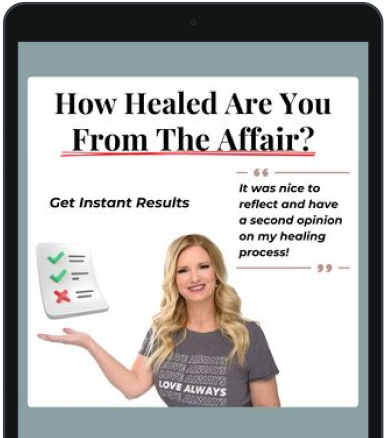
day. If you like this podcast, please share it with your family and friends, and I will talk to you next week. Thanks for listening to this week’s episode of Happily Even After Betrayal. If you want to understand what stage of betrayal you’re in, head to my website at lifecoachgen.com. That’s Jen with one N, and take the free quiz. It’s a simple step you can take today toward creating your own happily even after.