A random song comes on, someone’s tone shifts, a holiday rolls around and suddenly your chest tightens and your brain starts spiraling. That whiplash can feel like failure, but what if it’s simply your nervous system doing exactly what it was designed to do?
We sit down with Leah Davidson, a nervous system educator, longtime speech pathologist with a background in traumatic brain injury, and host of the Building Resilience podcast, to unpack what triggers really are and why betrayal trauma can haunt even the most “healed” person. We talk about how the nervous system constantly scans for cues of safety and danger, why betrayal can register as a life or death threat, and what happens when you drop into fight, flight, shutdown, or that stuck “gas and brake” state. If you’ve ever wondered why you can’t think clearly in the moment or why you become hypervigilant after infidelity or divorce, you’ll hear a framework that makes it all make sense.
We also get practical. Leah shares a simple safety sequence to help you orient to the present, check whether you feel safe in your body, and gently invite regulation so your “thinking brain” can come back online. We explore why familiar chaos can feel safer than calm, how patterns can repeat across relationships, and how self-compassion supports healing while still leaving room for strong boundaries and accountability.
If this conversation helps, subscribe, share it with a friend, and leave a review. Then head to lifecoachgen.com to take the free quiz and tell us: what’s the most common trigger you’re working with right now?
Please follow me on instagram and facebook @happilyevenaftercoach and if you want to see what coaching is all about I offer a free 30 min. clarity call via zoom.
Thanks for listening, please like and review as well as share with your family and friends.
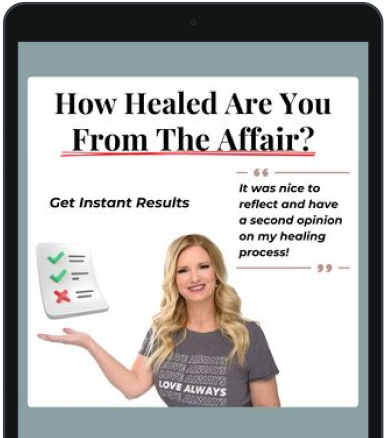
My website is www.lifecoachjen.com take the Free Quiz to find out how- How healed you are?
Transcript
Welcome to Happily Even After Betrayal with Life Coach Jen. This podcast is where we talk about betrayal and divorce and what it actually looks like to live through those experiences while still being a parent, a grandparent, a partner, or just a human trying to keep it all together. If your heart feels shattered, your nervous system feels dysregulated, and your future feels unclear, you’re in the right place. Here we focus on understanding what happened so you can rebuild your identity, restore your confidence, and find peace. So you can create your happily even after one episode at a time. Hey friends, welcome to the podcast. I’m so glad you’re here. Today I have a special guest, and I’m so excited to introduce her to you. She has been an important part in my own personal journey as well as in my business and my training. And her name is Leah Davidson. And I met her probably several years ago, and I was talking to another friend, and she said, You need to go into my friend’s training. And I thought, oh, I had just recently been exposed to nervous system, the nervous system in therapy, and it was making such a big difference in my life. And I thought, wow, if I could learn this, understand my nervous system so that I could help my clients. Yes, I want to do it. And I remember reaching out, it was like the night before she closed her offer. And I was like, is there any room, please? Can I get in? And I had already decided I want to do this. Of course, I did want to know how much it costs, but I was like, no, I’m doing this. I’m going to invest because I know this is important. And I am so glad I did. So, and also Leah takes women on retreats. I went to Italy last year and it was amazing. And I’m going to be going to Portugal in 2027. And so she has the gift of putting, in my opinion, amazing women together to create more amazingness, which is something that I just love. And so it’s like being a part of her community. I’m just so grateful that I am a part of it. So, oh, and the other interesting thing, she is coming from Toronto, Canada. I was thinking she was my first international guest, but I did have a guy from England. So she’s my second international guest. Oh, your first Canadian Canadian. Yes, very important. First Canadian. I love Canada. I’ve never been to East Canada, so I need to go there. But so she’s coming to us from Toronto. And so, okay, and Leah, tell us anything you want us to know about you.
Because you’re oh, I love that. Thank you for that introduction. And I just will say that I have loved, love being in your world too. That it has such you, I know, just your spirit, your kindness, your intelligence, everything. So I’m very happy to be here and to have had all this association with you. So I am from Toronto, Ontario, Canada. And most people will will hear little Canadianisms and my accent and things. We’re gonna say A a lot here. I’m gonna say A a lot. I’m gonna say process instead of process. So I’m gonna say a bunch of those things. Um, I think the only other thing I’d add is sort of the lens that I have on this work with the nervous system is my background is uh career-wise. I’ve been a speech pathologist for the past 27 years, working in the area of traumatic brain injury. And that is was sort of my introduction to all things brain health, which of course leads to nervous system health, which I know it people often wonder how does that relate to it? But when you’re working in speech pathology with regards to traumatic brain injury, it is all about executive functions and regulation and um how communication and cognition interact. So I just eventually transitioned into working with people who don’t have brain injuries, and lo and behold, we all have nervous systems. And when you have that understanding, you realize that it’s kind of the same thing. And on a personal level, I I know speaking to your audience, I um went through a really difficult divorce. Um, I guess it’s been like 21 years now. And so all the things that you share and talk about, even though it’s been 21 years, I know we’re going to be talking about triggers, and triggers are really real in terms of present-day moments, bringing things up that are kind of these old alarms. And I personally still experience that myself, even though I have been remarried for 18 years, very happily remarried for 18 years. But as we know with uh trauma and betrayal, the scars are there and healing is always possible. Hope is always possible. And I think it is an ongoing journey. And when you can come at it with through the lens of the nervous system, uh allows us to be a lot more compassionate to ourselves as well as compassionate to other people in our lives.
Yeah. Yeah. I, you know, it’s so fascinating because of course I think I heard of fight and flight and freeze, and I kind of understood that, but not until like the internet came along and Instagram, and I started realizing like, first of all, back in the day, they did not call it betrayal trauma. And so it’s like I was feeling all these things, and I just thought something was wrong with me. I always internalized it. And so the moment I discovered there was a name and a reason I was feeling these things, it lifted off so much shame for me. And it really like was the I think the turning point for my own healing journey. Even though I’ve been experiencing it for decades, once I could name it, I realized like, oh no, my body was just warning me. And so that’s why I’m so passionate about the nervous system. I think that is the key that a lot of people are missing from their healing because they don’t understand, and then they judge themselves for what’s wrong with me, which is what I did. And so the moment you can realize, like, oh, this makes sense why you’re feeling this way. And a trigger just feels so like you feel completely at the mercy to it, whereas when you can understand it, you can get a little bit more leverage around it, which I think is important to anyways. So I just love your knowledge is, I mean, I have like eight notebooks and files and anyways, of things that I’ve learned from you that I’ve, you know, I printed out all the stuff that you taught me because I always am looking at it. I’m like, okay, is this what does this mean? Or how could I help someone with this thing that they’re telling me about? And so tell us why, what are triggers, why
Safety Versus Danger In The Body
does it even happen? And help us just do a basic nervous system.
I think it’s helpful to understand because this is where the compassion comes from. Like we all have a nervous system, our nervous system is the way that the brain and body communicate with each other. And it’s on a very, very basic level that the role of the nervous system is to decide. Well, I don’t want to use the word decide because that implies cognition. The role of the nervous system is to assign you safety or danger. So what it does is it is constantly scanning for cues and clues in your environment, in your body, between you. And based on what it picks up, it will decide whether you are in safety or whether you are in danger. And it will either put you in a protection mode or a connection mode. So if it is scanning and there are clues that are similar to things that haven’t gone well for you in the past, or things that are linked to previous issues, things that are unfamiliar, it will judge it and decide, okay, this is not safe. And it will put you in a zone of protection. It’s not a cognitive thing, it’s not making a decision where it’s like thinking, oh, is this safe? Is this danger? No, it’s very, very automatic. It’s your biology trying to protect you. So when you said you go into fight or flight, that’s usually the first line of protection that we have. We try to mobilize to protect ourselves. And we do that by either uh fighting or flighting, really getting our energy jacked up. If the nervous system perceives that it the threat is really intense, it may drop you down into another zone of protection, which is conserving your energy. You know, we don’t have the energy, we got to stay alive here. And so that will be more of a shutdown mode. And it can also do both. It can do the you know, foot on the gas, foot on the brake, you know, deer in headlights. Oh my gosh, I feel the charge, but I’m paralyzed, I can’t do anything. That’s pretty, pretty common too. If though everything is good and everything seems fine, then you will be in a zone of connection. And this is where you have access to all your feelings, all your tools, all your thinking skills. You have access to your cognition. And so you can make good decisions and good choices. What happens when we go through something like a betrayal is it attacks almost the very core of our safety.
Betrayal Trauma And Survival Modes
So it can be something that maybe is reminiscent of something that happened to us in the past, but often it is just it’s something goes against everything that we thought we knew. And betrayal in itself is very dangerous to our system. Like I thought I knew something, I thought I knew someone, I put my trust in here. This is how my life was gonna go. And all of a sudden that’s shaken. So for the nervous system, it becomes life or death, literally. It feels so intense that it will put you into a state of protection, either that fight or flight mobilization, where we may be very, very hyper-vigilant, always on guard, very defensive, very ready to attack, ready to do things, or it will drop us right down and shut down, where this is that numbness or that that feeling of just being completely hopeless and helpless. Those are zones of protection and they’re not choices. This is just how our system has learned to protect us. It’s kind of brilliant, right? It really, really is a brilliant system. But we start judging ourselves because we’ll be in those zones, and then people will come along and say, Well, why did you allow that to happen? And did you know this is happening? How this? And it’s like, well, you don’t have access to your thinking skills when you’re in a zone of protection. You have like little bits of access, but you don’t have a ton of it. You are functioning based on your survival. So it’s great that maybe like I can look back now in hindsight, 20 years later, Leah. Why didn’t you do this? Why didn’t you do that? Well, I’ve got the wisdom of the 20 years, I have the regulation of the 20 years, I’ve had the maturity, I’ve learned so many things. Very different than when I was in it, and I was just in survival. I was doing what I needed to do to keep myself alive. So I have a lot of compassion for that girl 20 years ago. Like you’re doing the best that you can, and it was for your survival.
Yeah. Yeah. I I mean, I’ve I’ve had to give myself lots of compassion too, because I think, well, of course, we can’t change how we were, but we didn’t know any different. And that’s right. We were most of us were surviving. So I’m curious say something happened in your past 10 years ago and you feel like you’ve healed from it, but for whatever reason a memory pops up, or you’re just driving in your car and you hear a song connected back to that person. Yeah. Why is it that it’s like almost like I can close my eyes and in moments when I’m telling a story, feel like it was happening in that moment. Why is that?
Yeah.
What Triggers Are Made Of
So if we if we take what a trigger is, really, it is the moment, the cue now, and it carries a charge from the past. Yeah. Now it can be a sound, a plate, it can be a memory. I just always want to be careful that people automatically assume, like, oh, a memory, so it’s got to be something cognitive. No, you may have no recollection of it. It it’s like your body remembers, but your brain doesn’t. That’s why it can be a sound or a place or even a date or um a change in somebody’s tone or the way they behave, the way they do something. Any like a beat too long of a pause in a conversation. What that is, is it resembles something that was connected to likely to the trauma. Your body reacts before you often consciously have worked out what the cue means. So even a vague similarity to a past danger brings on that strong survival response. And this is why we can sometimes shame ourselves because we can think like, well, I know it’s like it’s so small, it doesn’t make sense. Like it shouldn’t, it shouldn’t panic me, or I’ve I’ve dealt with this already. Well, the nervous system has learned how to watch for cues that could mean danger, that could mean rejection, that could mean another shock. It doesn’t mean that it’s guaranteed it’s gonna happen, but we gotta have grace. Like, you know, it is remembering the body’s remembering something. There may be no clear memory attached, but the body has responded to a cue before we can explain our way through it. So it can feel just as dangerous like it’s happening again, even if it’s not the same circumstance in the same cue, because the body doesn’t have a timestamp, it doesn’t differentiate between real and perceived. It’s just as like sirens alert. We’ve been here before, we’ve seen this before, we think we’ve experienced this before. We are going to go and take care of ourselves.
Yeah. So what do we do when that happens? What can someone do? Because I think most of us, well, at least the what people I’ve experienced, myself and other clients, then they’re like, oh my gosh, I’m going backwards. This isn’t working. I must not be healing. I’m never gonna heal. I’m never gonna get, you know, so then we just go into most people go into that direction. Yeah. Yeah.
Regulating Triggers And Building Capacity
Yeah.
So I think it’s so important for us to recognize that there is no for the nervous system, there is no time stamp and there’s no expiry date. This is where you can be, you know, five years, 10 years, 20 years, a trigger comes up and it gets activated. We we just because there is no timestamp for the nervous system. And it can really unsettle us because we do, we always think progress is linear. And so that if I get triggered now, it means I haven’t healed. I’m like, listen, I’ve been happily remarried for 18 years, and there are things that still get me triggered, and I’ve done tons of healing. All it is is is just showing that there’s there is something in my system that it still feels like it’s a little bit unresolved. Maybe it is something that I do need to look at. Maybe it’s something that I do need to step in and regulate. And okay, I didn’t miss anything. Like just approaching it with some kindness, like, oh, it it really makes sense that I’m having this reaction based on the information in the past. I just need to check, does it make sense now? Yeah. And so I think that it’s not realistic to be saying that my goal is to never have triggers because I don’t even know what trigger sometimes, you know, like I said, 20 years and something will come up. I’m like, what the heck was that? Where did that come from? I don’t even recognize it. Yeah. And I don’t want to have that judgment on it. But what I do know and how I have healed, that even when it does come up, I have the capacity to manage it, to deal with it, to move through it. It’s not so much of a crisis anymore. It becomes more of a interesting that this is coming up and I’m being triggered by that. I want to explore it and I trust that I’m going to be able to handle it and explore it.
Yeah. Yeah. I mean, that learning those tools for me has been life-changing because I I’m not scared if I will feel a trigger. And some I’ve purposely gone into situations where I know I’m going to get triggered and I’m like, it’s okay. I’m going to be okay. It’s going to be fine. And I’m, it actually has helped me strengthen myself and gotten stronger. Yeah.
Because you build your capacity, you build your tolerance for being able to handle it.
Yes, which is very it feels very empowering. Would you say that people that haven’t healed, I see this often. It’s like they’re on their second or third marriage because they end up, it felt comfortable for whatever reason, their nervous system almost felt safer in the chaos and the pain. And so they don’t, they’re not recognizing not a good person. Like they just are recognizing it, just feels so familiar. Is that common too? Yeah.
Very common. So for the nervous system, familiar is it often equates it to safety. It’s not necessarily safety, but it’s it’s like, well, I know this. Yes. And I’ve done this before. And this is why people will end up falling in the same patterns over and over and over again because it is familiar. It doesn’t mean it’s good. It doesn’t mean it’s healthy. It just means it is familiar. And we want to try to break that cycle to understand what is healthy. What are the patterns that I want to be I want to be breaking so that I don’t identify the the unhealthy relationship with something that is good for me. And that’s why I think it does take some time to do the work on yourself. Yeah. And sometimes we can jump too quickly in relationships, feeling like the relationship is going to be healing. And then end up realizing I’m still actually in the same pattern because I haven’t done that healing myself.
Yeah. You’re bringing whatever hurt and pain. Yeah. And I think that uh for me, that kept me, the certainty kept me in my marriage. And it wasn’t until after I got divorced that I had that, you know, I was terrified, scared, I got divorced. But the difference in how I feel from living with my former spouse to in my home now, even my kids, we all notice it.
Yeah.
I’ve never felt so much peace in decades. And I didn’t know I was in that much turmoil or my nervous system was just on edge 24-7. I didn’t know that because it felt comfortable.
unknown
Yeah.
And now I can just imagine that as part of your healing, it’s not comfortable to be in healing either. Yeah. Because you get used to being hyper-vigilant, you get used to being in that dysregulated state all the time, that when you do find moments of safety and you do find moments of calm, it doesn’t feel right. I know that a personal story when I when I met my husband, my first date with him, I came back and told my girlfriends I wasn’t going to go out with him again. And when they asked why, I said, he’s just too nice. Like he just seemed he was really super, super calm and very, very kind. And this was not my experience. And I gave him another chance and we dated for a little bit. And then I did go to see my therapist. And I just said, everything’s going really well, but I’m so scared. This is not familiar. I’m waiting for this old pattern. And what it took was it it really took a lot of discomfort to have the realization, the understanding that I’m Slowly breaking the pattern, rewriting my story, having corrective experiences that something would come up. And oh my gosh, his reaction was not a reaction I was used to. And I it felt weird because I was bracing for a certain reaction. He didn’t have that reaction. It was uncomfortable. And I had to learn like, okay, it’s actually safe. I can trust this and let my guard down a little bit. And it it takes a while. Yeah. And it’s an ongoing, ongoing thing.
Yeah. It’s the rebuilding of that trust that we’ve lost. Now, yeah, you know, people always say, like, we’re waiting for the other shoe to drop. Yes. Right. Is that what is that? Like, what are we, what are we really saying or feeling like? Why is it feel like that? It’s like things are going great, great, great, great, great, and then something bad happens.
Well, we expect that because that’s a pattern that we’ve always had, and we don’t quite trust what being in a safe, peaceful state is. So we’re still like almost like half foot in, half foot out. So I’m feeling safe and secure, but I don’t necessarily trust this. And it doesn’t feel safe for us to let our guard down completely. Um, so we end up being really still very, very hyper-vigilant with certain things, always watching certain things, thinking that if I’m hyper-vigilant, I’ll be able to prevent, I’ll be able to stop. And the reality is that doesn’t do anything like worrying and being hyper-vigilant. Yeah, sometimes it can it can cause us to uh take action a little bit quicker, but we know with the nervous system it’s not a cognitive thing. Yeah. So it’s a little bit of a uh a safety net that we try to have, being hyper-vigilant and worrying about things and overthinking and and it doesn’t really protect us from anything. What we have to learn is I can trust myself that no matter what happens, I don’t have to worry about never being in the same situation again, because I can’t guarantee that. What I do know is I’ve done enough work to know that I can trust myself and how I’m going to handle things, how I am going to take care of me, have my own back. That is what I want to invest all my trust in.
Yeah. And when you can do that, I mean, it’s so life-changing, I think. It really like you feel at a victim, you feel like at the, you know, when you’re in the situation with someone, it’s like, and it’s exhausting to be hyper-vigilant and a full-time detective. And it’s it’s like it’s exhausting and it’s not how anyone wants to be, but somehow we after betrayal, especially, we become this version of ourselves that we think, who are we? So yeah, I the the safety piece I think is so important that in my program, that’s the first thing I teach is how to create safety within yourself because that for sure, and you can do it anywhere, right? You don’t have to, you can just go in your mind and find safety. You know, I love all the techniques I learned from you, but if we can really believe we’re safe, because sometimes we aren’t we are safe, but we don’t do not feel safe.
We don’t feel safe, yeah, yeah.
The Safety Sequence Plus Next Steps
Yeah, and that’s where I teach that safety sequence where you know it it helps you to orient to the present because that’s also as I said, when we get triggered, it’s usually pulling us back in the past, yes, and get oriented to the present. Am I actually safe in this moment, on this date, at this time where I’m sitting? The majority of the time it’s yes. So we orient ourselves to the environment. But then when we check in our body, the second question I always say is, do I feel safe? Like we often don’t feel safe. And it shows up in like tension or disease or pressure or anxiety, my chest is tight, I feel um, you know, numb for my body. I’m holding my breath. These are all things that we can recognize that the body is sending us a message that we don’t feel safe. So we have the I may be safe, but now I don’t feel safe. And then the third piece is we want to invite our body to relax, get more comfortable, slow your exhale, just drop your muscle tension, let your body loosen. And it may not create an instant calm, but even just like a shift in how you feel. And when you do and have that calm and acknowledge that you’re safe, that’s when you can re-employ and reinvite all your thinking skills come in. And then you can start asking yourself some questions, like, you know, what is um, what do I know? What am I assuming? How do I want to be? How do I want to show up? We can start using our our brain skills, our thinking skills, as opposed to just being reactionary because our body is in such distress, it’s coming out in a response that maybe is not the one we would want if we were a little bit calmer.
Yeah, for sure. We’re for sure. If we can calm ourselves, which is such a great tool. And I think people sometimes we think, well, that’s too easy. That seems too simple. That can’t really work. And it’s like, no, it does try it, try it 10, 100, 500 times, try it over and over and over again. Does work, and I call it your CEO brain, like to bring your thinking brain, CEO brain online, then we can make much better judgment calls because we all have this, you know, we play out the story in our head, and it’s usually so much worse, right? You know, I I do it now with my kids. I’m like, oh my gosh, they’re probably they’re not home. It’s two in the morning. Where are they? What if they’re in a car accident? Right? Like I go to worst case scenario. Yeah. And I’m like, no, they’re just having fun with their friends, right? They and if if they didn’t live with me, I wouldn’t know where they were. I wouldn’t be worried about this right now. They’re fine. Yeah, exactly. Yeah, yeah. So, oh, this is so great. Okay, so any last thoughts about triggers or things to be aware of that you want to share with us or about the nervous system.
I think you know what does come back to self-compassion when you do notice a trigger, don’t beat yourself up on it. Like it’s it makes sense. Your body is remembering something, and the only way we can heal is if we can sort of notice it, acknowledge it, relax into it, allow it to be there without that judgment. It is not, it’s not a weakness, it’s not a flaw, it’s not a lack of intelligence, it’s a biological reaction. And it is there to help us to see what still needs paying attention to for that healing. Yeah. So I think it’s the biggest self-compassion is so so needed. Yes, yes, especially in betrayal trauma. Yes.
And I always think of a trigger, it’s like, ooh, I have something to work on still. I have I have something to notice. Like, why was that so triggering to me? Okay, maybe let me work through it. Some things can be worked through in minutes or hours, some take days and weeks and going to your coach and really thinking about it. But it is so true. And I think the holidays, a lot of people, I know a lot of my clients are worried about the holidays because the holidays are, you know, reference points of discovery or of it’s our first Christmas or Thanksgiving holiday without, you know, that looks different. And so I think compassion, our world, if we could our world could have more compassion, we could change the world, don’t you think?
Oh, I so agree. I so agree. And having compassion doesn’t mean you don’t have healthy boundaries. Yes, doesn’t mean that you don’t hold people accountable, doesn’t mean that you have to have relationships with everybody. Yeah, because having compassion just removes the blame and the shame and allows you to take care of yourself, what you need to do, the boundaries you need to put into place. So I think that’s also a piece. Like, don’t think that having compassion is kind of a weakness. Yes, not.
And for sure, starting with yourself, having compassion with yourself, because I think women, especially, we tend to be so hard on ourselves. I’m like, why are we doing that? I know it just I don’t know if we think like it’s just a badge of honor, or yeah, that’s the I don’t know. I don’t know what we think. How we’ve been taught how we’re society, yeah, yeah. It’s so true. Yeah, I could talk to you for a long time about this because I really like it. I think the more we understand about trauma and our nervous system, like it changes everything. It really makes such a big difference. So thank you so much. So, how if someone wants to find out more information about you, how would they do that? And of course, we’ll put all your information in my show notes.
Yeah, the best, the best place is probably my podcast called Building Resilience.
Yes, and it’s really good.
Yeah, I have an episode that comes every Wednesday, and usually on there is where I share with you any other things I’m doing. Like I know in January I’ll be doing a virtual summit. Um, I have a mental health stationary line, so I have some journals that you can get all that information all through my podcast. I have uh mini school community, yeah. I have an advanced training that happens once a year. That that’s what you took. Yeah. So I have a whole bunch of different ways, and you can always find me on my podcast.
Yeah. And and if you want to know more about nervous system, I talk about a little bit about it, but that’s all you’re talking about. So it’s it is a great thing.
All I’m talking about, yeah, to different degrees. I have like my school community, where I’m really focused a lot on mid-life women and just introducing the whole concept of the nervous system all the way to my advanced training, which is if you’re a helping professional therapist to coach somebody who’s a caregiver who wants to go really, really deep. Yeah, uh, that is my advanced training. So it’s sort of have the spectrum of breaking.
All right. Yeah, but for sure, go listen to her podcast because it’s gonna be really helpful. Anyways, okay, thanks, Leah. This was so great. So if you guys like this podcast, please like and share it with your family and friends. And I will talk to you next week. Bye-bye. Thanks for listening to this week’s episode of Happily Even After Betrayal. If you want to understand what stage of betrayal you’re in, head to my website at lifecoachgen.com. That’s Jen with one N and take the free quiz. It’s a simple step you can take today toward creating your own happily even after.
It is time to start healing
instead of reeling from betrayal
Click on the link below to take the free quiz. Don’t wait to begin living your “happily even after!”
I love helping women and men heal from betrayal. I originally started this podcast with my husband and since my divorce I have taken it solo. I love sharing and talking about the 50/50 of life and providing tools to help you along your path to healing.